
Our field team hits big goals at the Allan Hills
It has now been just over three weeks of living at our basecamp at Allan Hills in Antarctica, and to say we’ve acclimated to field life would be an understatement. In fact, the NSF COLDEX field team is thriving. Here are a couple of the things we have acclimated to while living here at the bottom of the world:
The elevation: our camp sits at 6,450 feet on top of a glacier, and whatever shortness of breath we had when we arrived is old news now
The cold: even with average temps sitting around -15°C, we often catch ourselves saying, on a sunny day, “Wow, it’s hot today!”
The food: while most of the food we eat is expired (a combination of bulk ordering, slow deliveries, and living in the world’s best always-on freezer), we’ve succeeded in cooking some delicious meals, such as vegetable curry, loaded mac & cheese, and tofu stir-fry
The work: now that everything across our operations is running smoothly (touch bamboo), everyone knows when and where they are needed, which makes both every camp tasks and science work much smoother day in day out
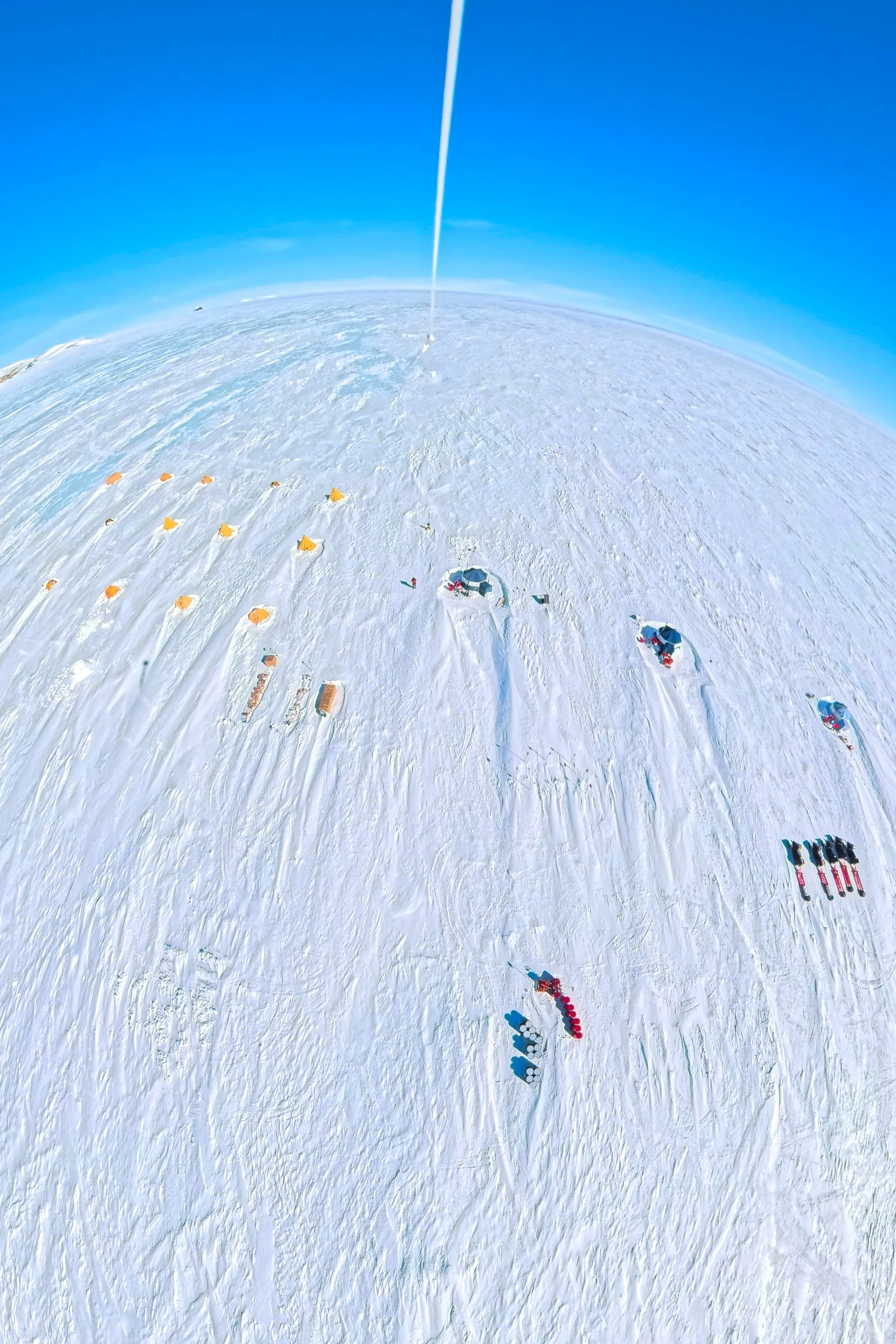
An aerial view of our base camp at the Allan Hills, taken with a kite!
We’ve continued to benefit from extraordinarily good weather: low winds and sunny skies has been our most typical combination this past week. This in turn has allowed us to receive multiple flights from McMurdo Station, which brought with them empty ice core boxes, supplies, and fuel. In return, we loaded up the Twin Otter planes with full ice core boxes (weighing up to 200 pounds each!), waste, and empty fuel barrels. Once in McMurdo Station, the ice core boxes sit in a specialized freezer near the Crary Science Building. Sometime early next year, they will be picked up and shipped all the way back to the United States, where they will be stored at the NSF Ice Core Facility in Lakewood, Colorado. In Summer 2026, a team of NSF COLDEX scientists will venture there to collect ice samples for various projects.
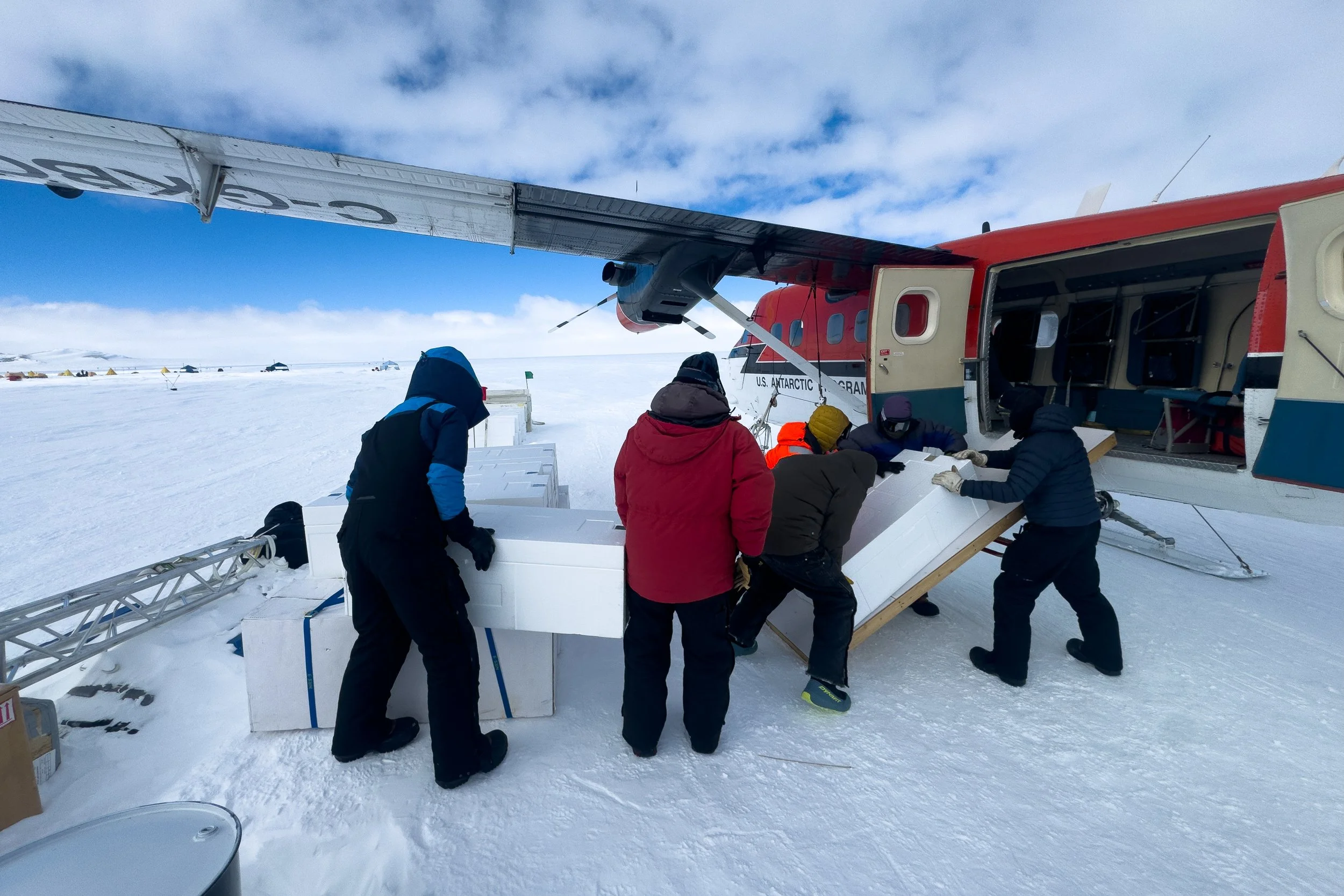
This is what a typical “ice flight” looks like when pilots come from McMurdo Station to pick up our ice core boxes.
Good weather doesn’t just allow flights to reach us: it makes life here so much easier. We sleep better when wind noise levels are lower and temperatures are higher. Setting up and storing our snowmobiles is easier, and navigating them across the snowy and icy landscape we’re calling home is smoother.
On the science side of things, we hit two major milestones this week. First, we finished coring with our Blue Ice Drill in the Cul-de-Sac, reaching a final depth of 91 meters. The 104 sections of this core, which together make up one 91 meter long core, likely contain within them 3 to 5 million year old ice!
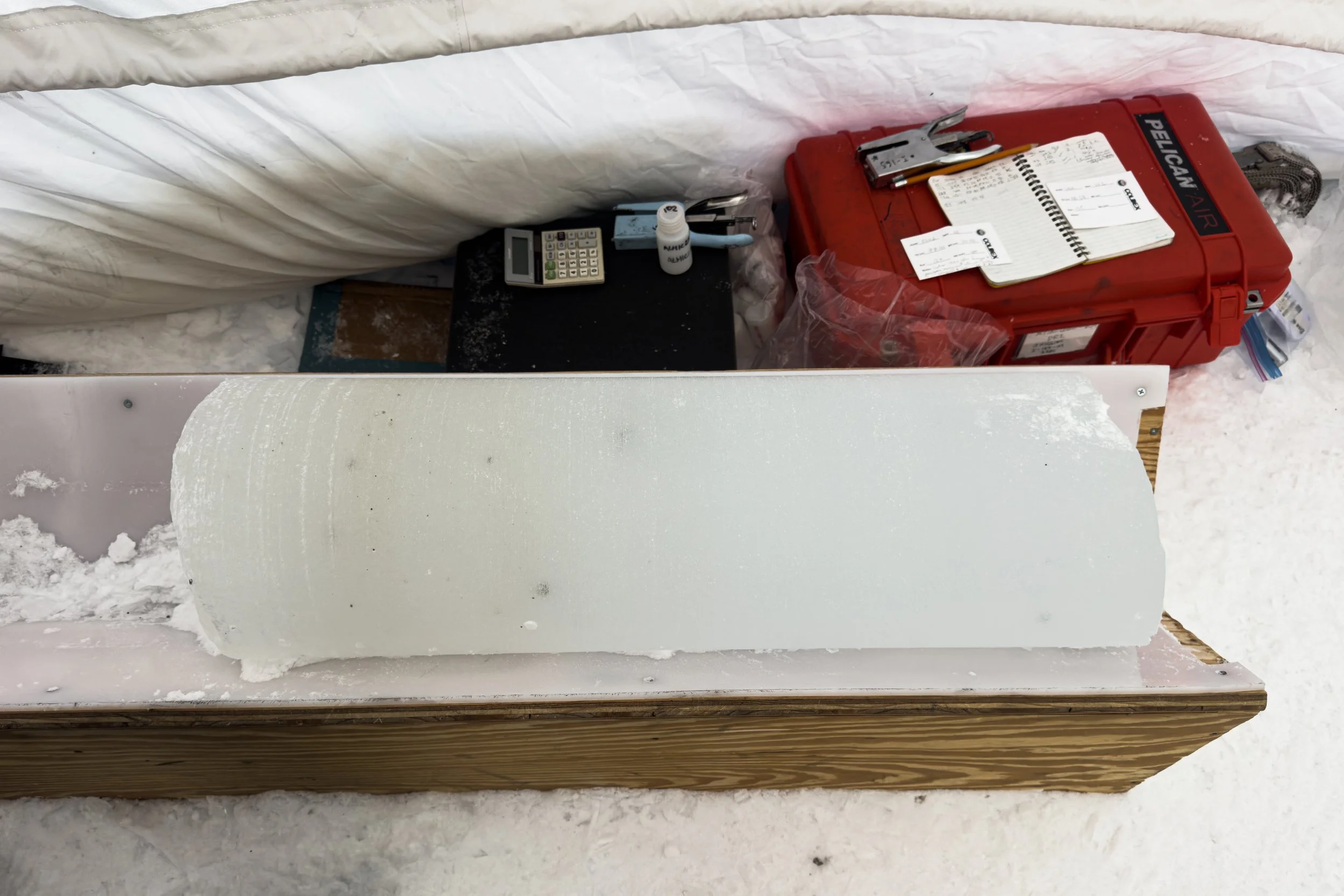
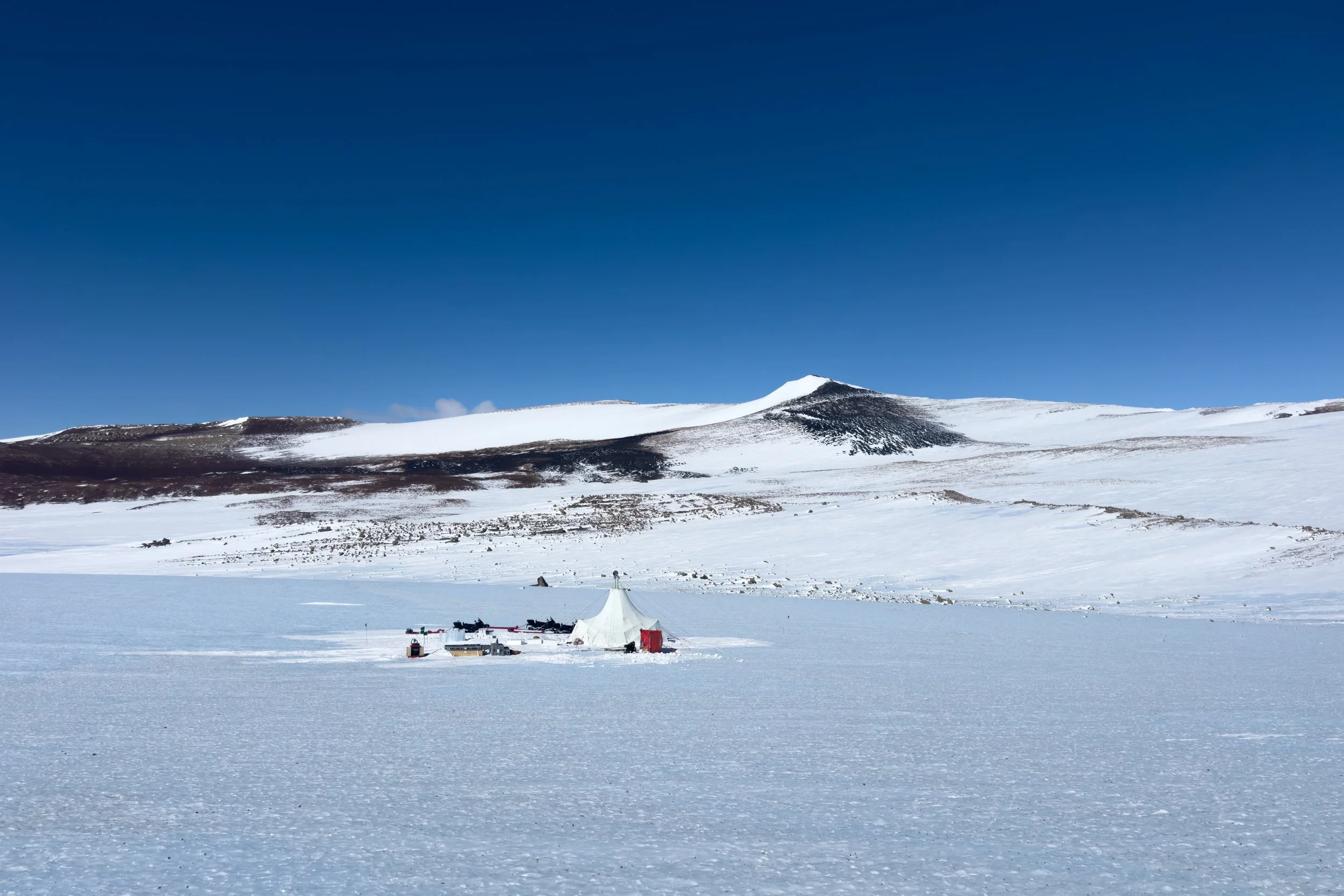
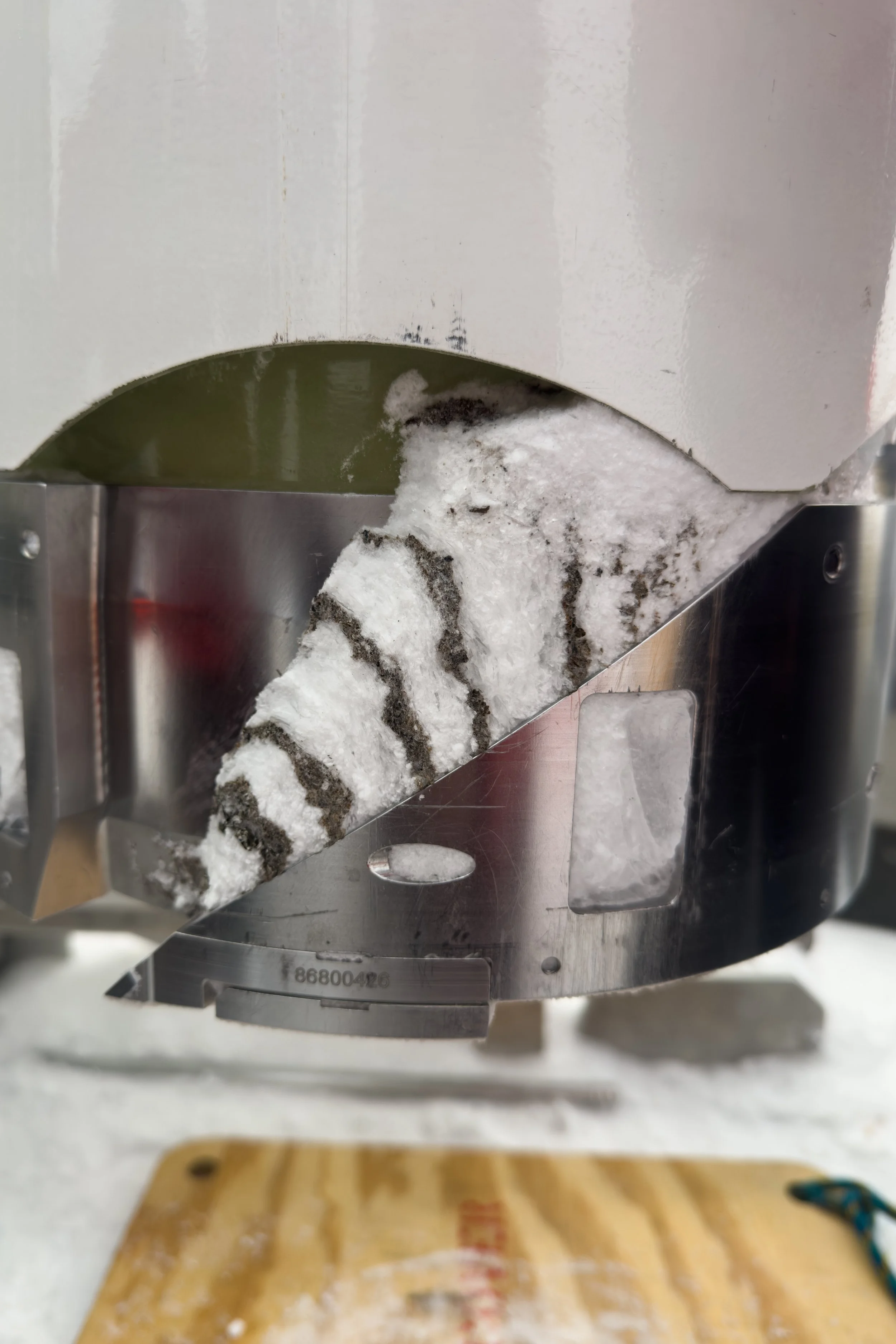
(click images above for full size and descriptions)
Second, we resumed drilling with our Shallow Wet Drill and began drilling with a drill fluid: estisol. Using drill fluid makes drilling a little more complicated: the estisol stays the same temperature as the ice it touches, around -30°C or more, which means that whoever handles the cores gets much colder, much faster. On the plus side, as far as drill fluids go, estisol is biodegradable and less dense than water, which makes cleaning it from the ice very easy. Plus, it makes drilling much smoother, which in a deep borehole is critical, as without drilling fluid, pressure will often cause ice cores to fracture and the borehole to slowly close due to ice flow once a core is removed. With drill fluid, the borehole is able to stay structurally sound, allowing us to keep drilling while ensuring high quality core despite continuing deeper into more pressurized ice. As of this writing, the Shallow Wet Drill has collected ice cores at 150 meters!
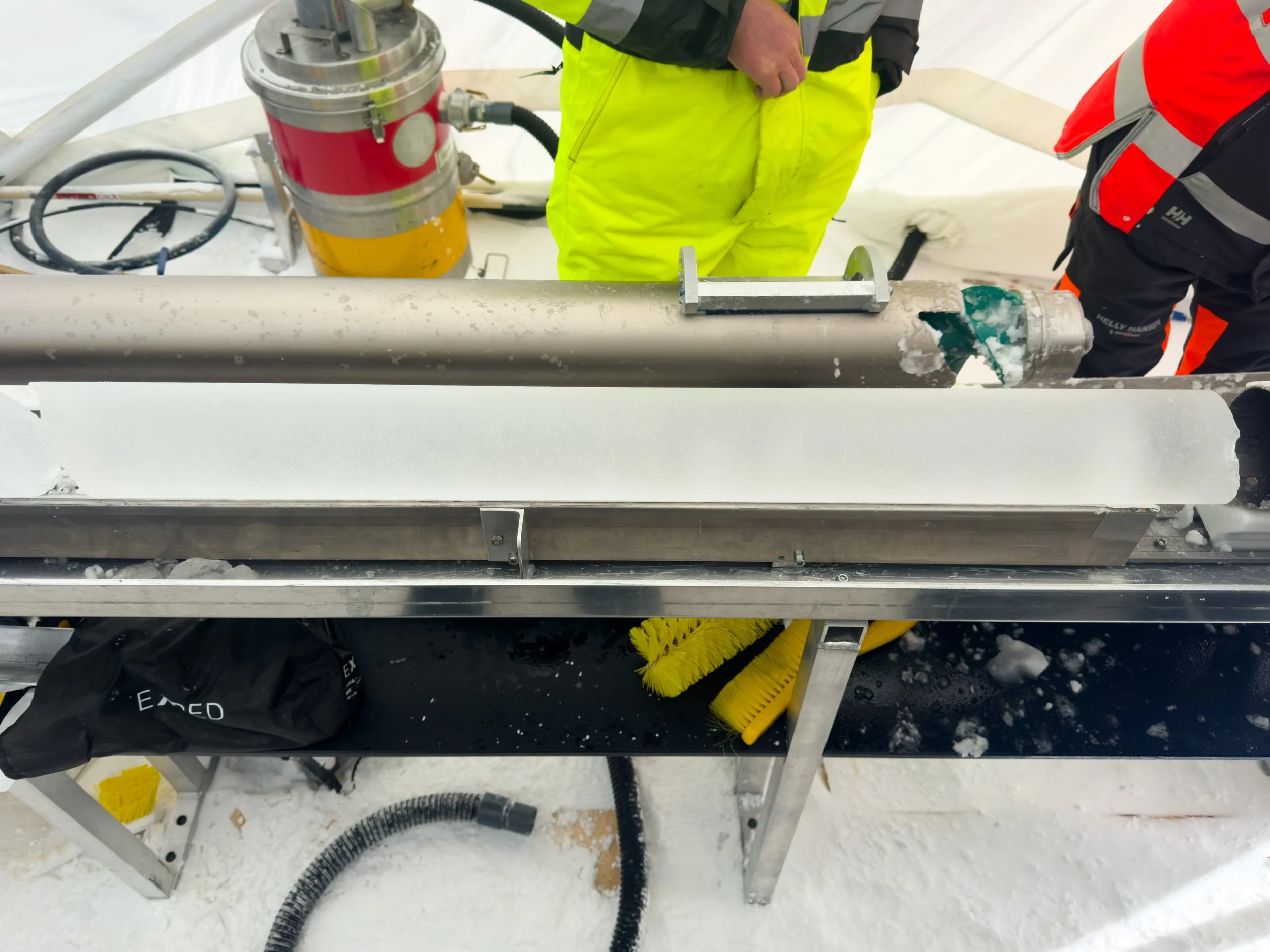
One of the many pristine ice cores we have collected at the Shallow Wet Drill with estisol as our drill fluid.
Finally, the good weather has allowed us to tackle a couple more science projects, notably hand augering and surface sampling for water stable isotopes. Both of these tasks allow NSF COLDEX scientists to learn more about the area we are in, how old ice is trapped and preserved in the Allan Hills region, and will hopefully help us make future decisions about where to keep conducting field work.
Hand augering involves using a miniature version of our big drills, and is best operated with 2 or 3 people. Hand augering is the most accurate way we have to determine the age of the ice without deploying a larger drill, and we are only coring to depths of around 20 or 30 meters. The system’s convenience and relative ease of use allows us to core multiple sites in a single week, and these hand auger cores will serve as additional samples and help us find other sites where we could potentially drill with our big rigs.
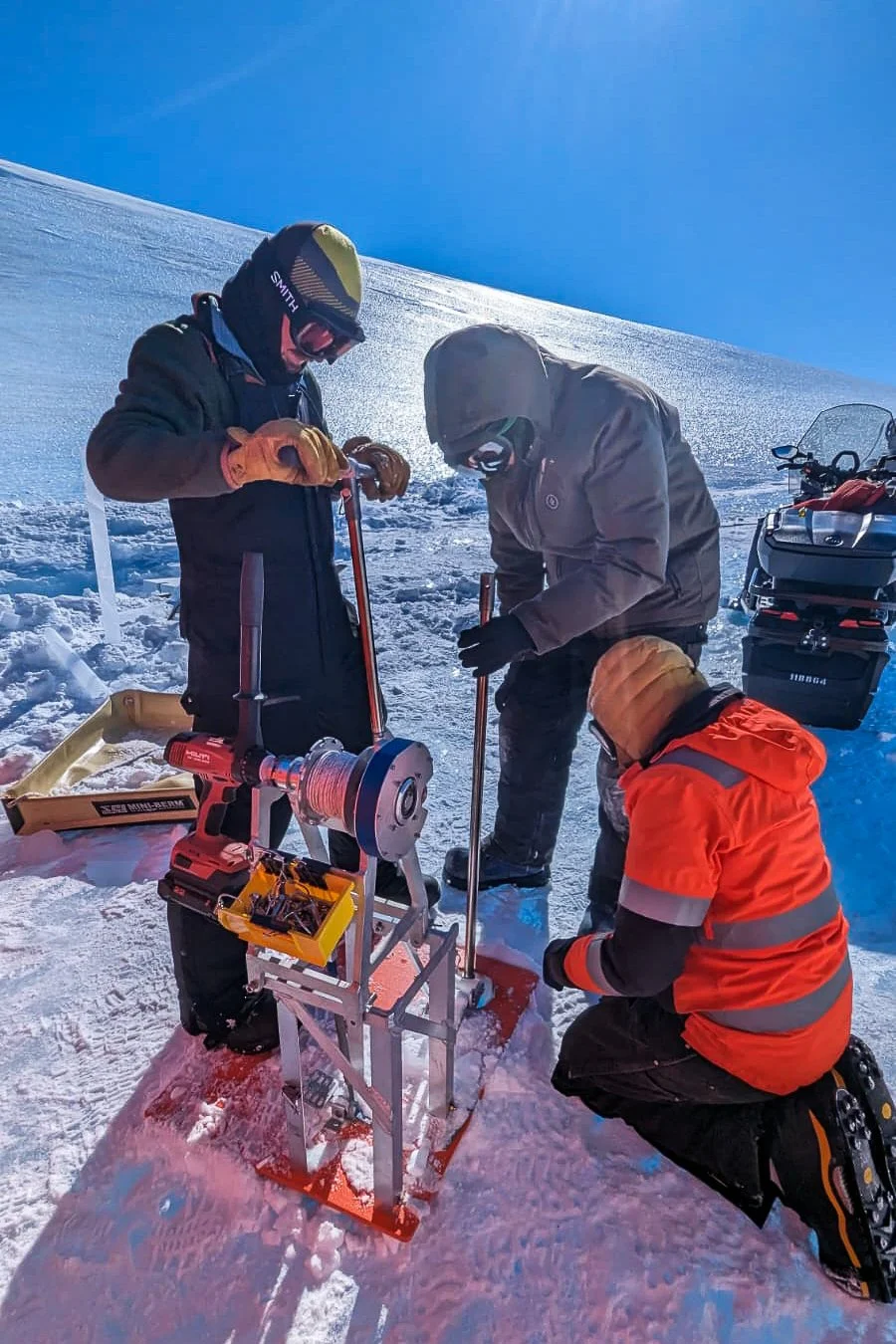
(From left to right) Ivo Strawson, John Higgins, and Andrew Haala operate the hand auger system in the Cul-de-Sac. Photo by Branden Joy.
One final piece of news: John Higgins, Professor of Geosciences at Princeton University and our Science Lead, left us on Monday morning, leaving Oregon State University post-doc Romilly Harris Stuart as our Science Lead. John traveled back to McMurdo Station alongside a dozen ice core boxes and is set to depart the continent in a couple of days. From the entire team: “Thanks, John! We’ll miss you!”
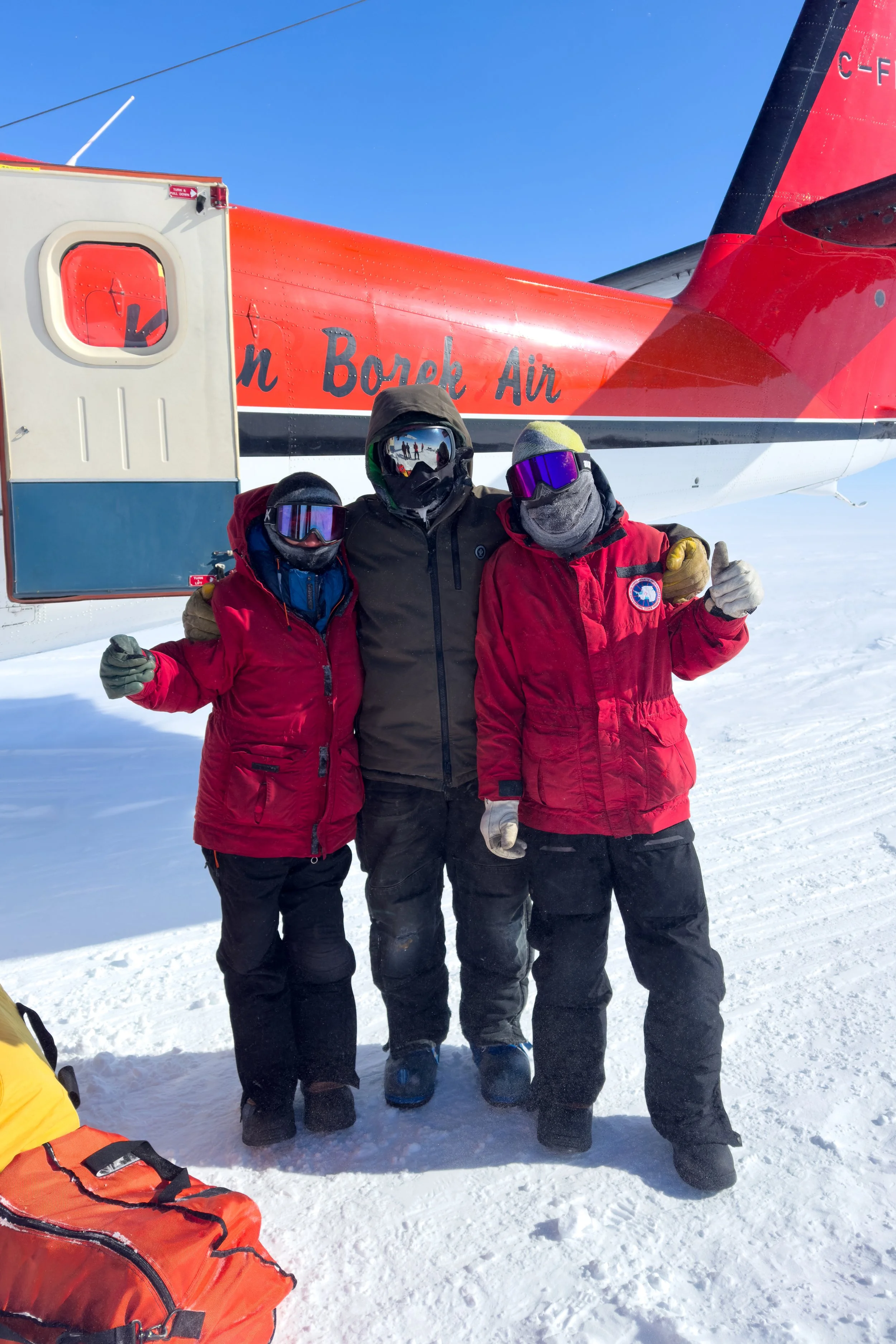
John Higgins (center) with Romilly Harris Stuart (left) and Ivo Strawson (right) before John’s flight back to McMurdo Station.
And that’s it for today’s update. I’ll be back in your inbox next week. Until then, stay warm!
~ Martin Froger Silva, NSF COLDEX Digital Content Coordinator and I-187M Ice Core Handler.
As a reminder, we’re updating you throughout the field season via our newsletter and this blog. We’re also posting images, videos, and more on our Instagram and LinkedIn accounts, so follow us there if you haven’t done so already! Here are some direct links to some of our recent highlight videos: Ice Core Pickup by Plane + Take an inside look at our Blue Ice Drill borehole!
NSF COLDEX thanks the United States Antarctic Program for logistical support, with coordination and support from NSF Office of Polar Programs, NSF Antarctic Infrastructure and Logistics Program, the NSF Ice Drilling Program, the NSF Ice Core Facility, and the Antarctic Support Contractor.
