
The whirlwind of activity continues, and now I write to you from the Allan Hills, Antarctica! Today marks two weeks since our team fully arrived at our 2025-2026 deep field camp where we will spend the next six weeks drilling for multi-million year old ice and conducting a series of geophysical surveys of the area. While it has only been fourteen days since our camp has reached full operating capacity, many on the team agree it has felt like much longer. Eternal sunlight, long work days, and endless camp chores all contribute to the eerie feeling that, here at the bottom of the world and surrounded by tall mountains on one side and an ocean of blue ice on the other, the passage of time has slowed to a trickle.
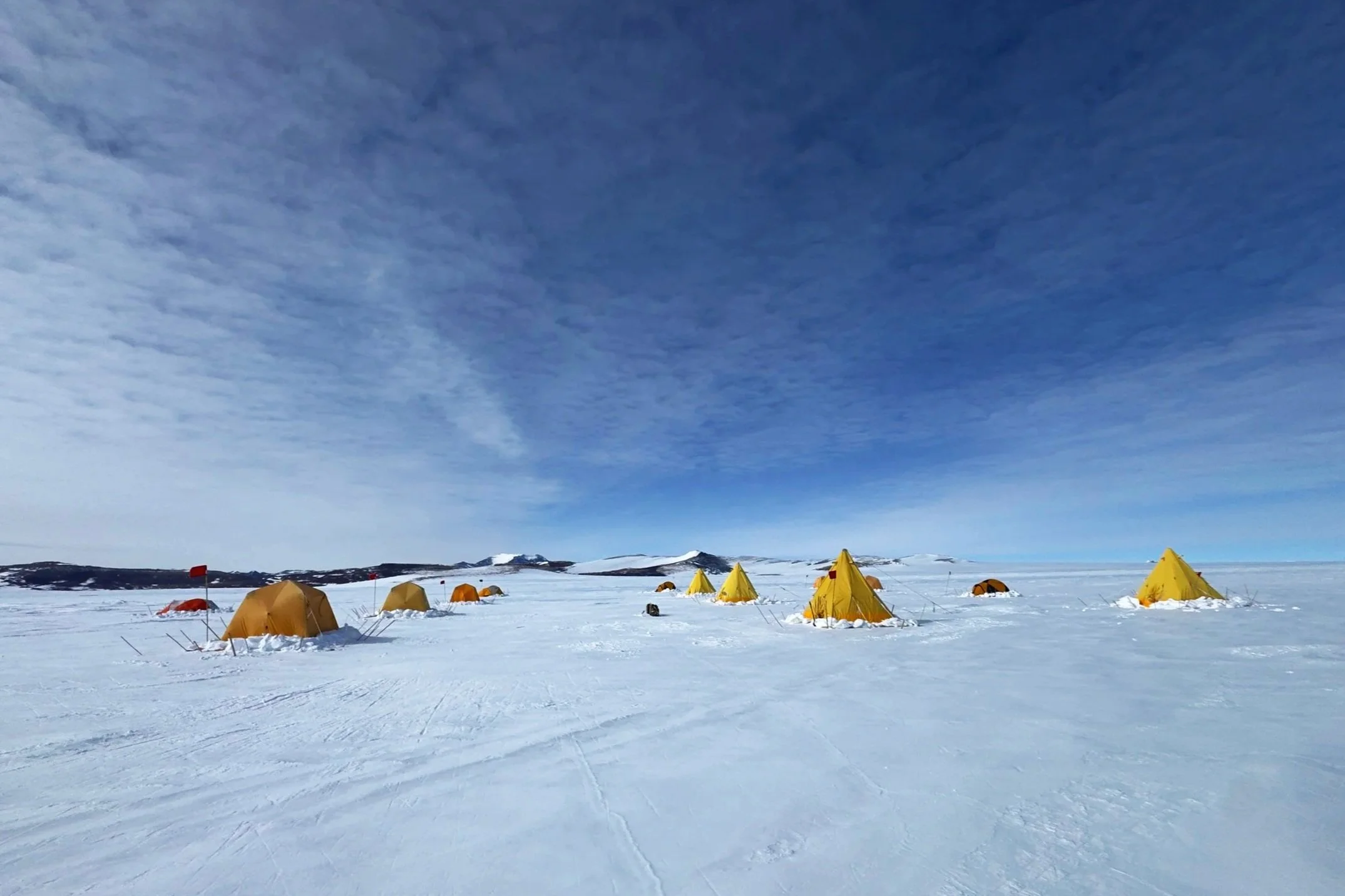
View of our sleep tent area, affectionately known as “Tent City”. The yellow pyramid tents sleep two and are called Scott Tents, while the three first tents in the left row are known as Arctic Pups and sleep one. The smallest tents we have at camp are called Mountain Tents and sleep one. We also use two Scott tents as restrooms.
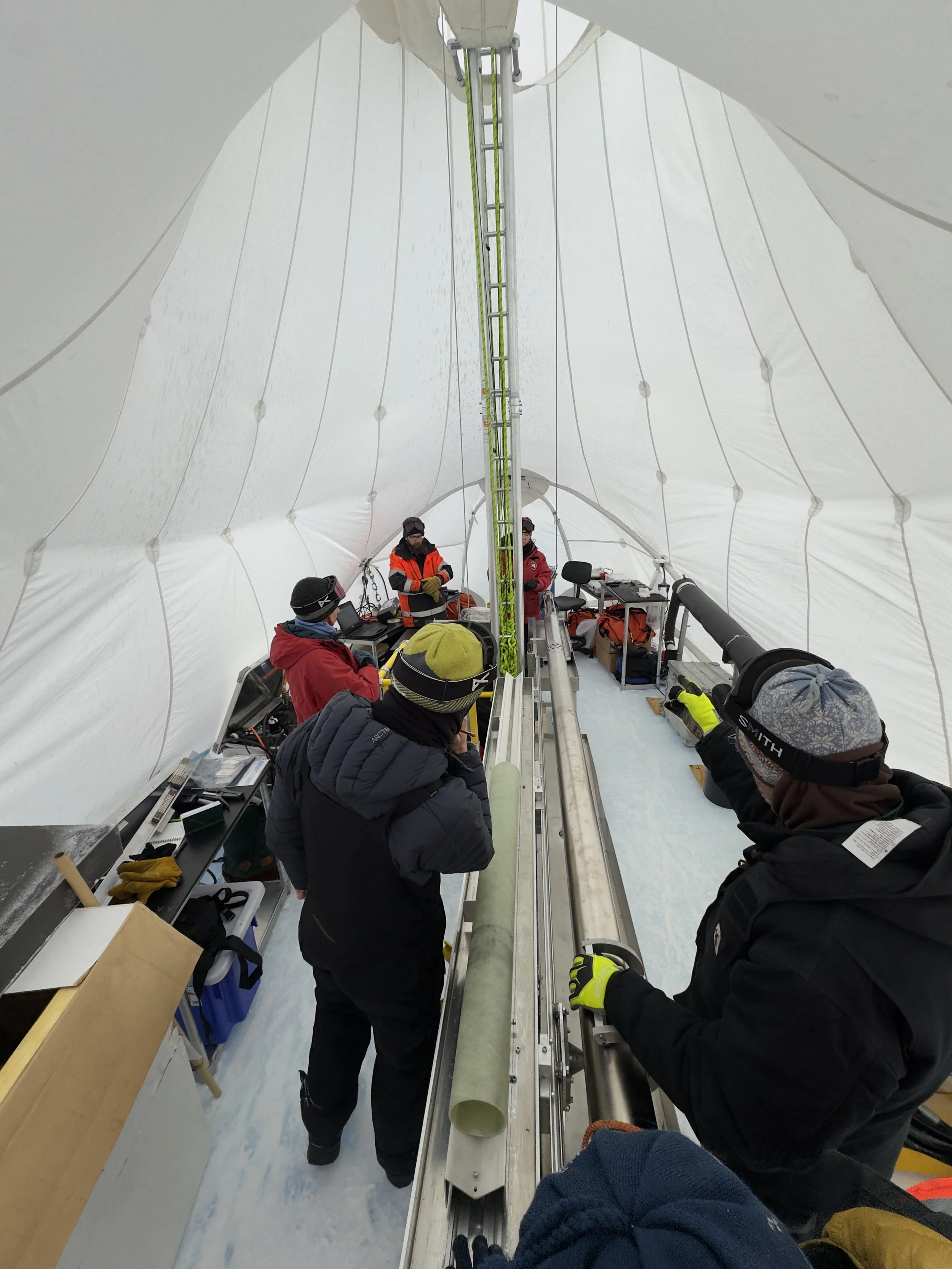
Our first few days at our Allan Hills base camp were remarkably unconventional: low winds, good visibility, and moderate temperatures gave us the chance to set up both of our ice core drilling tents in a matter of days, an Allan Hills record (the tents require low wind speeds to safely set up). Our first drill tent, in view of camp on a flat section of the blue ice, is home to our 4 inch wide Shallow Wet Drill. Here we will drill for multi-million year old ice all season, hoping to reach a depth of a couple hundred meters. Our second tent, home of the 9 inch wide Blue Ice Drill, is situated in a place we call the Cul-de-Sac: a unique area where the ice shelf folds over on itself, bringing some of the oldest ice up towards the surface. This drill will operate for a shorter period of time and drill a shallower core than the first.
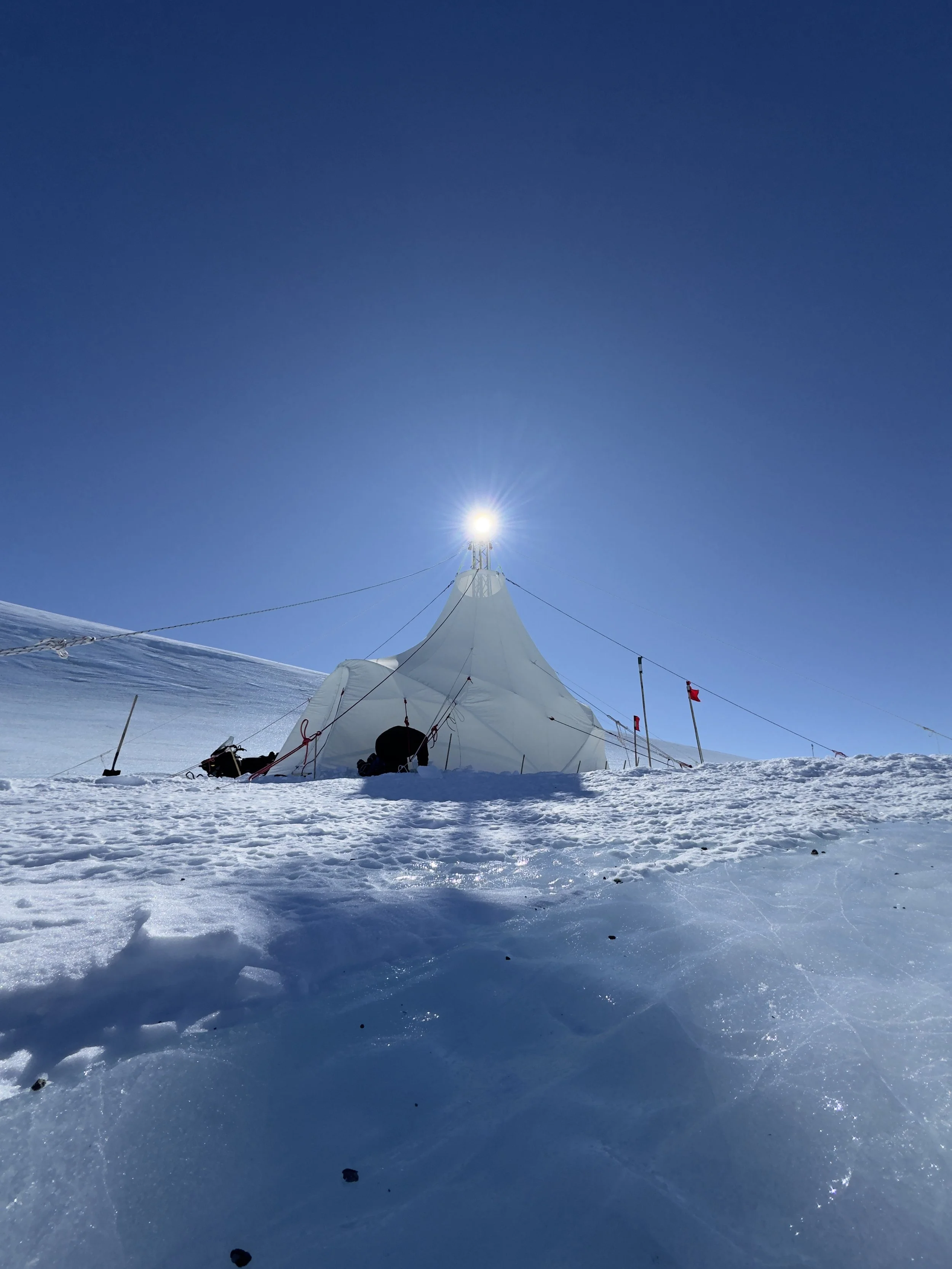

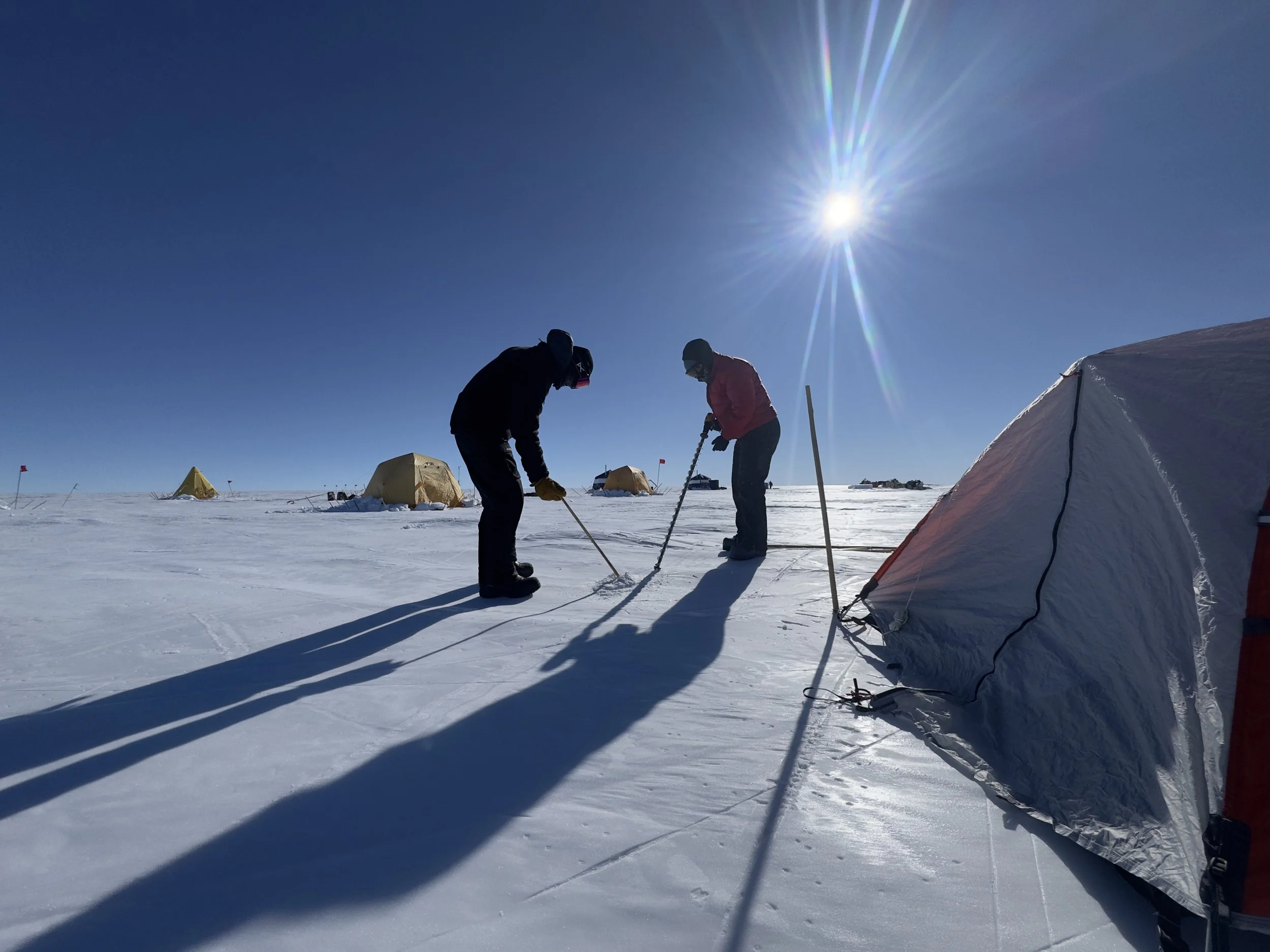
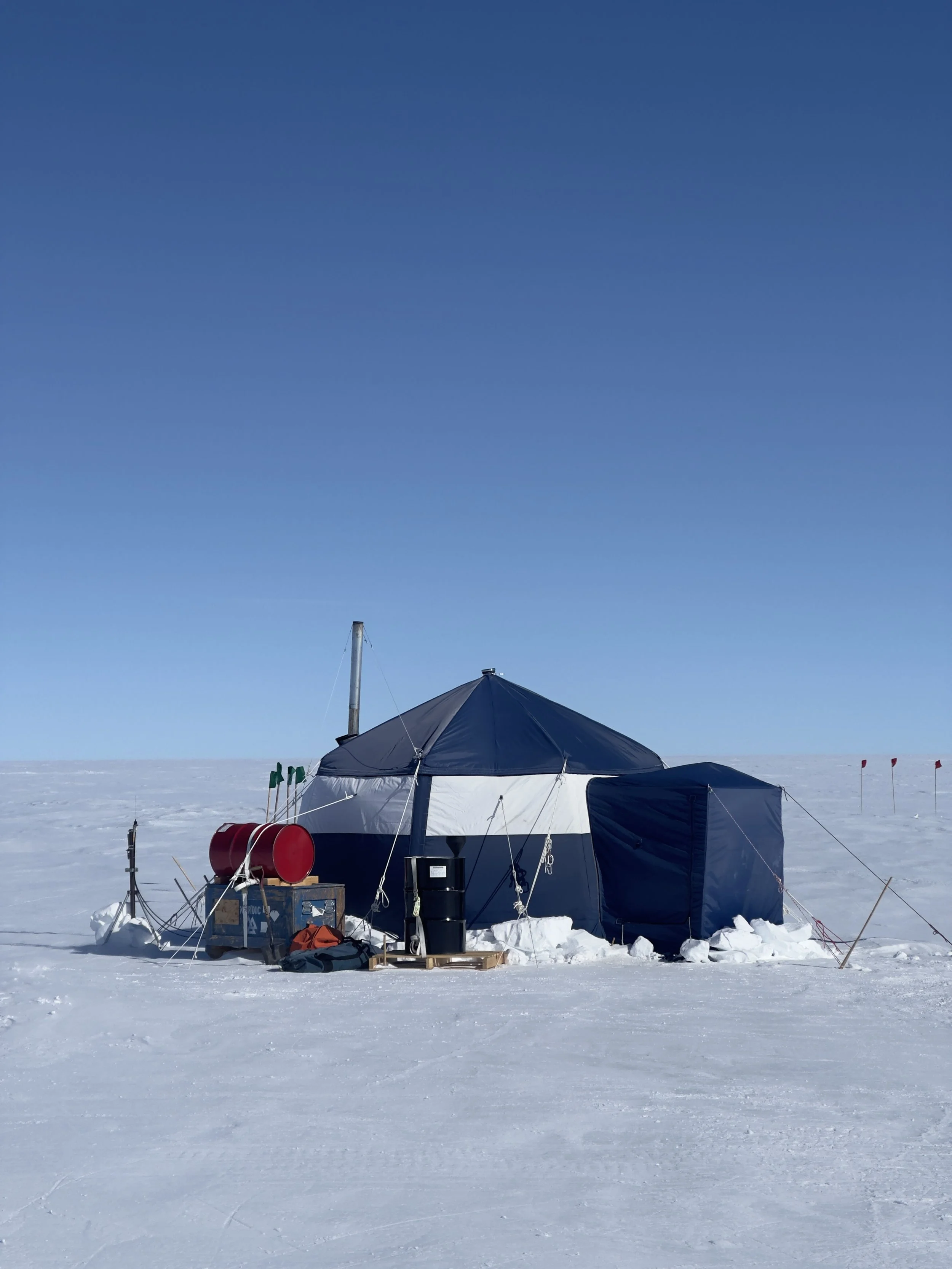
The fair weather also enabled us to adapt to camp with relative ease. Once our sleeping tents were set up, we dug out food from our storage trench. We recovered equipment that was left for us by last year’s field team and organized our tools, snow mobiles, and storage tents. We settled into a groove, starting our days with 8 AM team meetings, getting to know one another, and learning the basics of living in a remote field camp with 12 other people. Such items include: keeping our eating/hang out tent tidy, shoveling snow to melt for drinking water, entering and exiting our bathroom tents gracefully, and making sure there are enough hand sanitizing stations throughout camp.
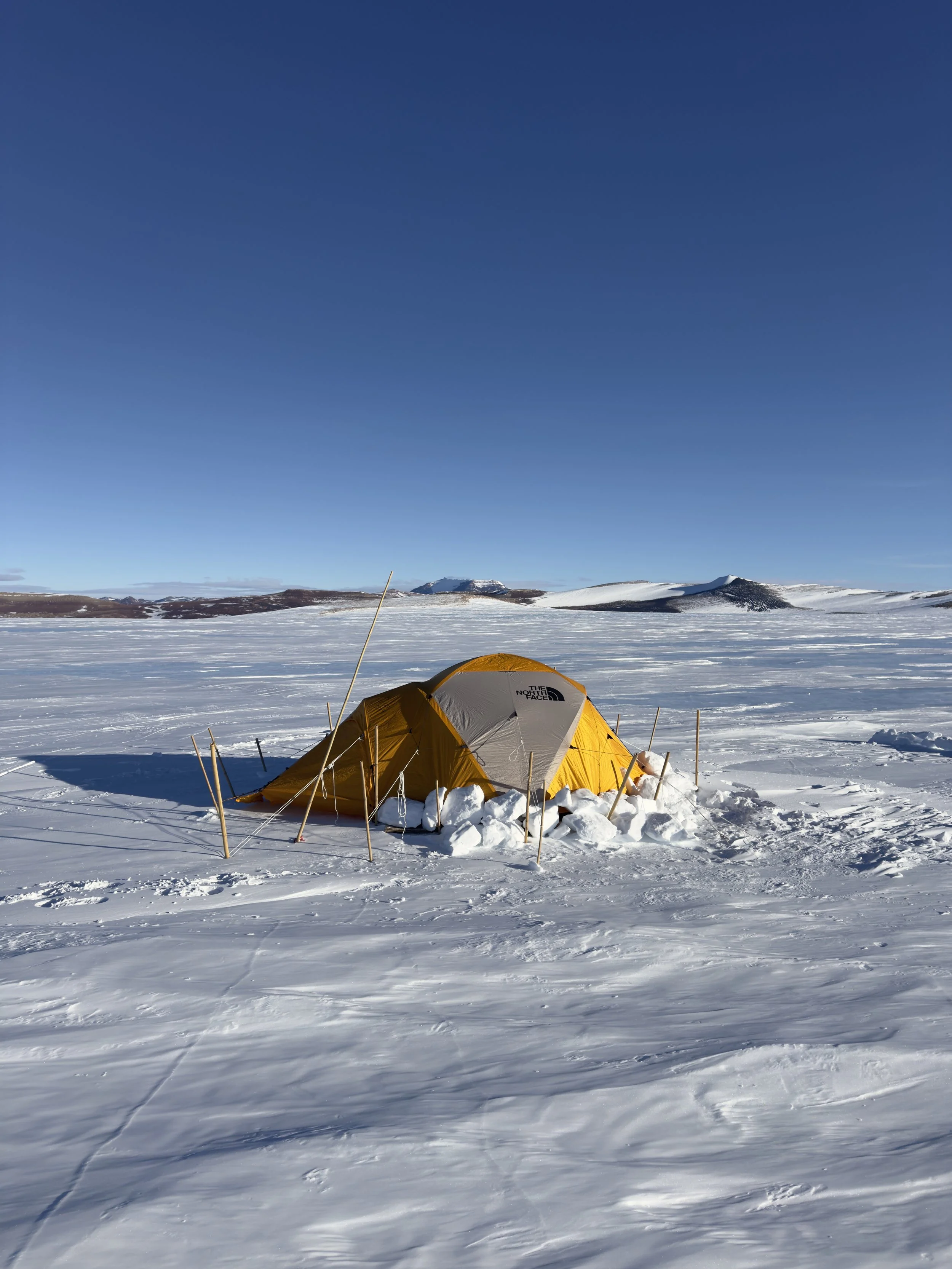
Our luck with the weather, however, did not last. Day 4 in camp treated us to 30 knot winds and wind chill temperatures nearing negative 40 Fahrenheit (which, coincidentally, is also negative 40 Celsius). Gone were the calm blue skies and windless strolls from tent to tent. This was the Allan Hills weather many of us had heard so much about: cold, windy, brutal, and a reminder that our environment, if we’re not careful, can turn deadly in a matter of hours. A day after the winds started, we awoke to one of the dreaded foes of the Antarctic worker: snow drifts. Most of us spent the morning of Day 5 excavating tents, supplies, and snow mobiles from under mounds of drifted snow, each shovelful of snow heavier than the previous one due to compaction. This weather also led to the cancellation of flights containing cargo and supplies.
One of our Arctic Chiefs holding strong during 34 knot winds.
Our science, however, remained mostly unaffected by these issues. Day 5 at camp was also Day 1 of drilling, and, thanks to the expertise of the NSF Ice Drilling Program and the work of our NSF COLDEX ice core scientists John Higgins (Princeton University), Romilly Harris Stuart (Oregon State University), and Ivo Strawson (Oregon State University), we successfully collected our first ice core section!
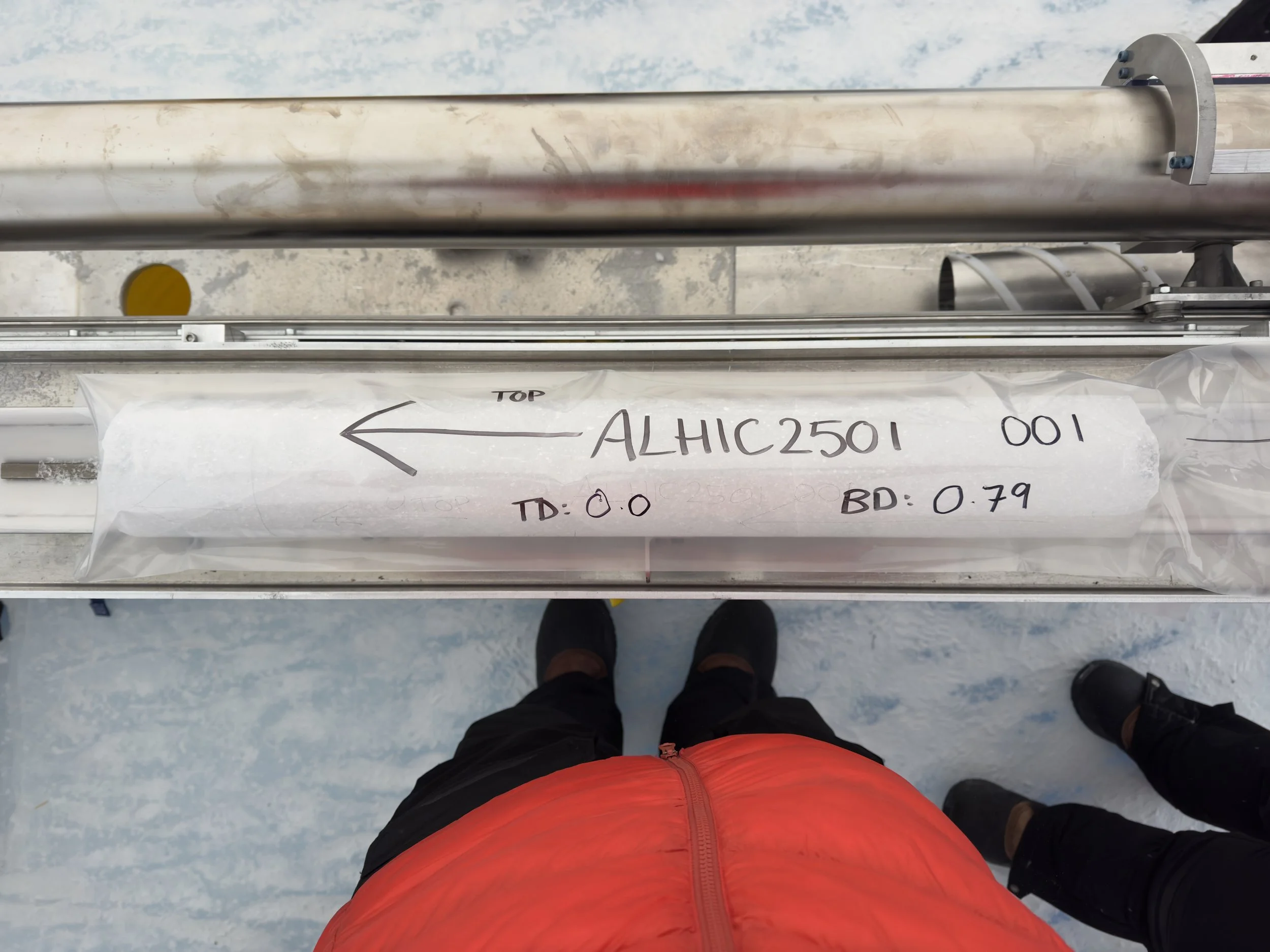
Our first core from the Shallow Wet Drill!
While our Geophysics Lead An Li (University of Washington) conducted initial surveys and phase-sensitive radar measurements (ApRES), our ice core drilling team continued collecting samples. Once our two additional ice core handlers, Danielle Whittaker (Oregon State University) and myself, Martin Froger Silva (University of Minnesota), were trained, operations at Shallow Wet Drill tent were able to continue regardless of the weather conditions outside (within certain limits, notably excessively high winds and extremely low visibility, none of which we have experienced yet).

While the weather conditions have improved since then, they severely delayed flights from McMurdo Station to us. While we have enough supplies and equipment to last us a while at camp, Kate Koons, Antarctic Support Contract Field Risk Manager, who had been with us since our arrival at camp, enjoyed our company five more days than she initially expected. Unfettered and always ready to help, Kate integrated into our camp and was an active participant in camp chores and science support. Kate boarded the first flight from McMurdo Station that was able to get to us on Monday. We’ll miss you at camp, Kate! Thank you!
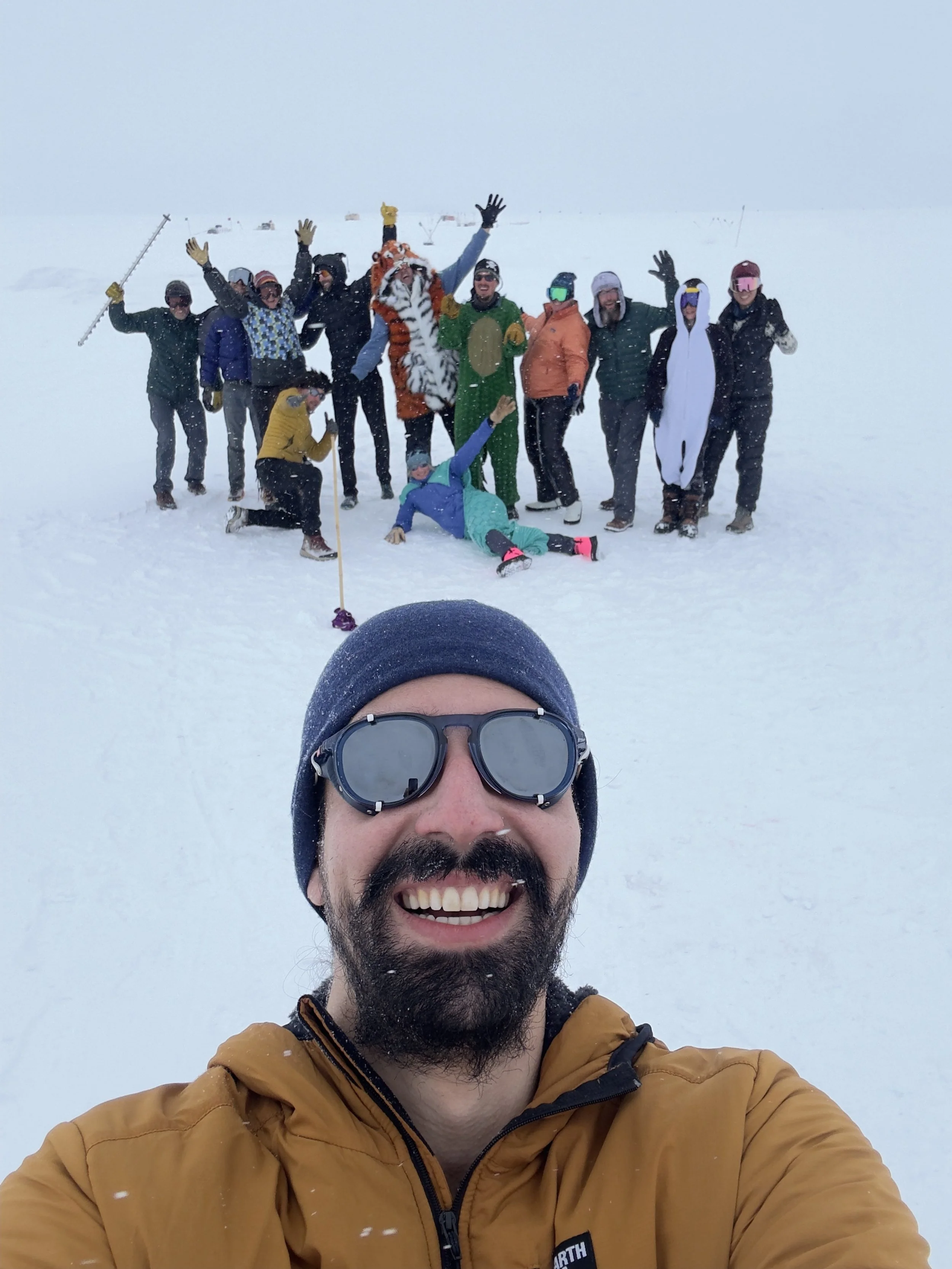
On Saturday (Friday USA), we celebrated an Allan Hills Thanksgiving, which included a .5 mile costumed Turkey Trot around camp, a full feast with turkey and veggie bakes, chocolate cake, and spinach and cheese dip, and a movie night.
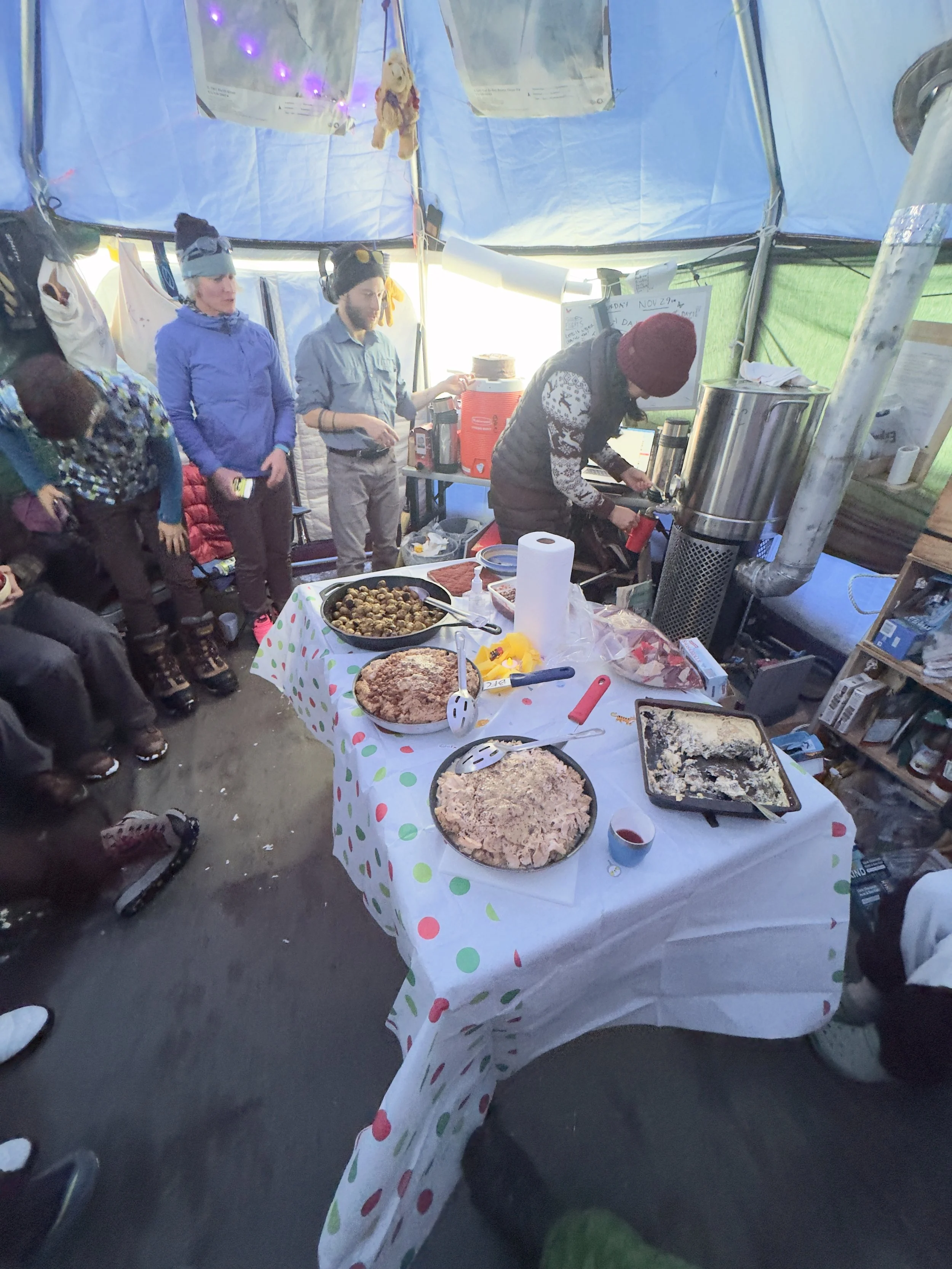
On the science side of things, the Shallow Wet Drilling is on pause due to minor technical issues. The last core collected before drilling stopped reached over 50 meters. Repairs are nearly complete, and we hope to pass the 100 meter mark in the next week. The Blue Ice Drill has been drilling very quickly, with nearly 10 sections of core collected a day since we started drilling. Geophysical measurements continue to be conducted and their radius around camp expands. The rest of the week has gone smoothly, with more flights scheduled later this week after further weather delays. These will deliver cargo and pick up many of the ice cores we have collected thus far.
As of this writing (December 3rd at the Allan Hills), the weather is fair, with sub-5 knot winds and sunny skies—atypical weather conditions for the area that are not unwelcome. Considering everything we’ve done, we’re calling Weeks 1 and 2 at the Allan Hills great successes, and look forward to what’s to come. Until next week!
~ Martin Froger Silva, NSF COLDEX Digital Content Coordinator and I-187M Ice Core Handler.
We’re updating you throughout the field season via our newsletter and this blog. We’re also posting images, videos, and more on our Instagram and LinkedIn accounts, so follow us there if you haven’t done so already!
NSF COLDEX thanks the United States Antarctic Program for logistical support, with coordination and support from NSF Office of Polar Programs, NSF Antarctic Infrastructure and Logistics Program, the NSF Ice Drilling Program, the NSF Ice Core Facility, and the Antarctic Support Contractor.
